Medical manufacturing is a high-stakes environment. Procurement leads and supply chain directors operate under strict regulatory standards and tight budget constraints. Yet true success requires much more than just precise cutting. You need a resilient supply chain and deep engineering expertise to bring premium metal parts to market safely.
Key Takeaways
- CNC machining is essential for medical components requiring precision, consistency, and reliability.
- Tolerances and performance depend on design, material, and process selection.
- Common materials include stainless steel, titanium, and PEEK for biocompatibility.
- Process matters: 3-axis (simple), 5-axis (complex), Swiss (small, high-precision).
- Best suited for complex, low-to-mid volume production.
- Quality and compliance (ISO 13485, FDA) are critical to success.
What Is CNC Machining in the Medical Industry?
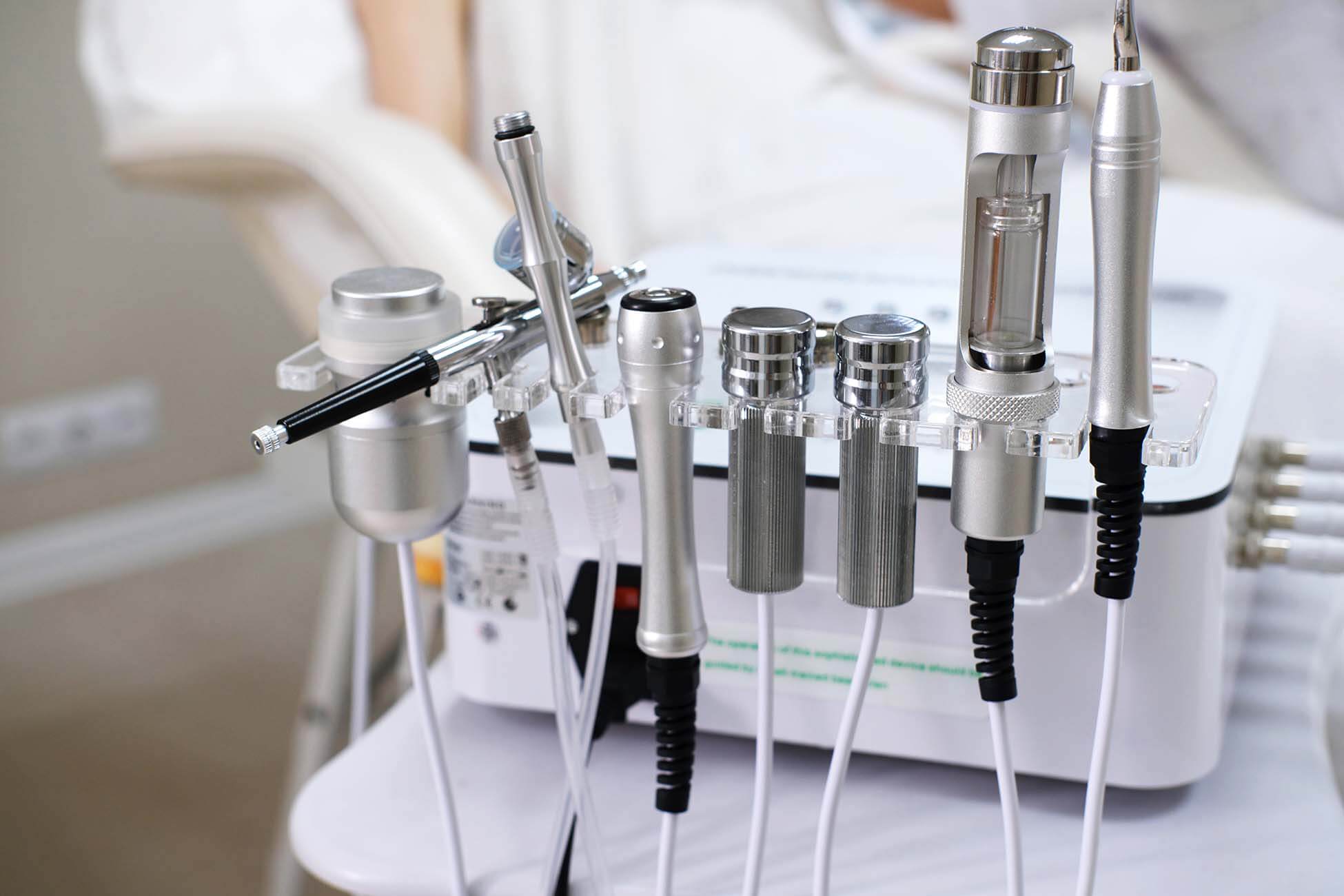
Medical CNC machining is a highly precise subtractive manufacturing process that uses computer-controlled tools to cut raw materials into complex, FDA-compliant medical devices. This process acts like an automated sculptor, carving “body-safe” components from solid blocks of metal or plastic. This automated method ensures absolute repeatability and tight tolerances for life-saving applications.
Manual cutting methods simply can’t meet the demands of modern healthcare. The medical sector relies heavily on CNC machining in the medical sector because it guarantees unparalleled precision. You need parts that match exact engineering specifications every single time.
This technology allows you to scale from a single prototype to high-volume production without sacrificing quality. And that consistency is essential when creating customized life-saving components that must perform flawlessly in human bodies or clinical settings.
What Types of CNC Medical Equipment Exist?
Modern healthcare relies on a vast array of custom components and complex assemblies. We can group these applications into three main categories.
- Surgical tools like scalpels and forceps demand exact sharpness and ergonomic balance.
- Orthopedic implants such as bone screws, dental implants, and hip replacements require perfect surface finishes to integrate safely with human tissue.
- MRI scanner components and microdevices need non-magnetic materials and microscopic precision. Intricate housings are also machined to protect sensitive internal electronics.
- High-precision ventilator valves and manifolds, as well as micro-machined pacemaker housings requiring absolute hermetic sealing.
We have seen firsthand how minor geometrical complexities in surgical tools can halt an entire production line. A slight deviation in a grooved handle might pass a quick visual check but fail an ergonomic grip test during a lengthy surgery. That is why CNC machining for the medical industry uses advanced, complex toolpaths to control every microscopic curve. You need the right machine for the exact job.
Choosing the Right CNC Machining Process for Medical Components
| Machine Type | Best For | Tolerance Capabilities | Typical Medical Components |
| 3-Axis Milling | Basic geometries and flat surfaces | Up to +/- 0.001 inches | Surgical trays, simple brackets |
| 5-Axis Machining | Complex, multi-sided geometries | Up to +/- 0.0005 inches | Artificial joints, MRI scanner components |
| Swiss Turning | Small, cylindrical, high-precision parts | Up to +/- 0.0001 inches | Bone screws, microdevices, dental implants |
| Vertical Machining | Flat, blocky, or multi-sided components | High precision milling | Diagnostic equipment housings |
Why 5-Axis Machining Matters for Complex Geometries
Traditional 3-axis machines cut along three linear directions. This setup requires an operator to stop the machine and manually reposition the part to reach different angles. But manual adjustments introduce a high risk of human error.
5-axis machining solves this problem by moving the cutting tool across five different axes simultaneously. The machine can reach complex geometries in a single setup. This continuous movement drastically reduces production time and minimizes the chance of alignment mistakes. When you manufacture organic shapes like joint replacements, 5-axis technology delivers the superior precision necessary for a perfect anatomical fit.
Top Biocompatible Materials for Medical Device Machining
Material selection dictates your manufacturing timeline and your bottom line. Medical devices must use biocompatible materials that safely interact with the human body, yet these specific materials often present severe tooling challenges on the factory floor.
For example, cutting titanium generates massive amounts of friction and heat. This heat will quickly destroy cutting tools if the manufacturer lacks precise coolant controls and specialized equipment. Plastics like PEEK offer excellent biocompatibility and are much easier to machine, but they require highly controlled environments to prevent contamination. Balancing these physical properties ensures you maintain compliance while keeping the entire project cost-effective.
| Material | Biocompatibility Level | Machinability Score | Relative Cost | Common Medical Uses |
| Titanio | Excellent | Hard | High | Permanent implants, bone plates, pacemakers |
| Stainless steel | High | Moderate | Medium | Surgical instruments, temporary implants, forceps |
| PEEK | Excellent | Easy | Very High | Spinal fusion devices, dental healing caps, tubing |
| Cobalt-chrome | Very High | Very Hard | High | Heavy-wear joint replacements, knee implants |
| Aluminio | Low to Moderate | Very Easy | Low | Diagnostic equipment chassis |
When to Use Which?
Titanium is incredibly popular for orthopedic implants. The Ti 6Al4V alloy offers an unmatched strength-to-weight ratio, bone-like elasticity, and easily integrates with human bone. But it’s notoriously difficult to cut as it generates excessive heat and wears down tooling rapidly.
If you need to manufacture surgical instruments, 304L stainless steel is often the better choice. It resists corrosion during repeated autoclave sterilization cycles and holds a sharp edge beautifully.
For non-metal applications, medical-grade plastics play a vital role. PEEK (Polyetheretherketone) and PEI (Polyetherimide) are highly sought after because they are radiolucent and will not interfere with MRI scans. PEEK is also an ideal electrical insulator for wearable medical devices.
For structural components requiring high performance without the weight of metal, aluminum is the standard for diagnostic equipment chassis. For extreme environments, superalloys like Inconel provide unparalleled strength, though they often require specialized techniques like Wire EDM.
Meeting Medical Quality Standards and Compliance

A trustworthy manufacturing partner must guarantee absolute traceability from raw material selection all the way to final delivery. C provides peace of mind with every project because we utilize on-the-ground inspection staff at every phase of production.
Our facility operations strictly adhere to medical cleanliness standards, and our ISO 9001:2015 compliant processes guarantee that your parts meet exact built-to-print accuracy. Our quality protocols ensure absolute PPAP (Production Part Approval Process) compliance and prevent costly defects from entering the global shipping pipeline.
We also maintain a rigorous Quality Management System (QMS) that documents tight tolerances as we know that documentation is just as important as the physical part itself.
What Are Class I, II, and III Medical Devices?
The FDA categorizes medical devices into Class I, II, and III based on their risk to patients. Class I devices pose minimal risk (like surgical scalpels), while Class III devices sustain human life (like pacemakers) and require the tightest machining tolerances and strictest traceability.
The classification directly impacts how you source and manufacture your medical components:
- Class I devices have general controls and are easier to mass-produce.
- Class II devices, such as syringes or powered wheelchairs, require special controls to ensure performance standards.
- Class III devices require premarket approval from the FDA.
This highest level of risk mitigation and part failure prevention demands flawless execution, exceptional materials, and absolute documentation.
Choosing the Right Medical CNC Machining Partner
The manufacturing reality is that choosing a vendor based on the lowest bid may not often end well. You need an end-to-end partner who engineers for scalability and guarantees quality on the ground. A lowest-bid quote quickly becomes incredibly expensive when a low-tier supplier struggles with complex logistics or fails a critical material traceability audit.
CXB helps clients produce premium metal parts by providing industry-specific expertise, cost-effective solutions, a powerful manufacturing network, and peace of mind with every project. We solve the precise headaches of supply chain management by combining massive production capacity with on-the-ground quality assurance teams.
Getting from Prototype to Mass Production
Scaling a medical component from a single rapid prototyping run to high-volume production is rarely straightforward. Companies often fail to account for material waste or scaling costs. They design a beautiful prototype that’s financially impossible to mass-produce.
We have seen procurement leads struggle with high-volume production because they partnered with a shop that only knew how to cut metal. They lacked the full-service logistics needed to get those parts across the globe efficiently. CXB manages the entire process from initial CAD design to final delivery.